
Rafael Brooks · 10 September 2026
Navigating Recovery Patterns in Search Visibility After Infrastructure Shifts for Subscription Platforms
Subscription platforms often undergo infrastructure shifts that include server migrations, content delivery network updates, and database restructurings, all of which can alter how search engines crawl and index their pages. These changes frequently lead to temporary drops in visibility, yet data from multiple industry reports shows that recovery follows identifiable patterns when teams address technical and content factors systematically. Observers note that platforms handling recurring billing models face unique challenges because their pages generate dynamic content tied to user accounts, which search engines evaluate differently during indexing cycles.
Common Infrastructure Changes and Their Search Effects
Teams at subscription services routinely migrate from on-premise servers to cloud environments or implement new content management systems, and these moves can interrupt established crawl paths. Research indicates that search engines may deprioritize pages during such transitions because new IP addresses and SSL configurations require re-verification, while altered URL structures can break internal linking that previously supported ranking signals. Studies from academic sources reveal that platforms experiencing simultaneous changes to both hosting and schema markup see extended periods of reduced visibility compared to those handling one adjustment at a time.
Figures from the Australian Bureau of Statistics highlight growth in digital subscription services across the region, which correlates with increased frequency of infrastructure updates as companies scale operations. When these updates coincide with seasonal traffic peaks, the impact on organic listings becomes more pronounced because engines allocate fewer resources to re-crawling sites with fluctuating user engagement metrics.
Documented Recovery Timelines and Patterns
Recovery in search visibility typically unfolds over weeks rather than days, with initial stabilization occurring around 14 to 28 days after the infrastructure shift completes, according to aggregated platform data. Longer timelines appear when platforms also modify their sitemap submissions or robots.txt files without proper testing, whereas phased rollouts that preserve legacy redirect chains produce faster rebounds. Those who have studied these events point out that subscription platforms often regain 70 to 85 percent of prior visibility within two months when they monitor crawl errors through established webmaster tools and correct them promptly.
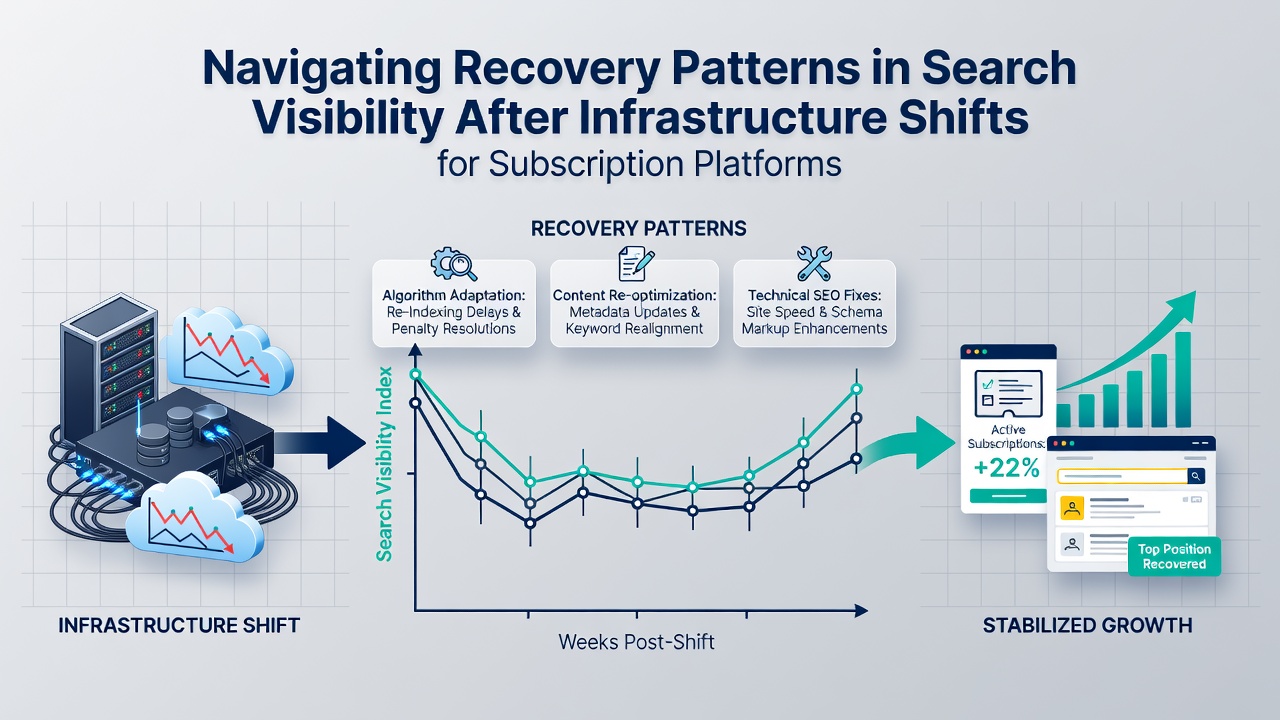
September 2026 brought additional attention to these patterns as several major subscription services completed large-scale cloud migrations ahead of anticipated algorithm adjustments. Platforms that maintained consistent internal link equity during these periods demonstrated steadier recovery curves, while others relying heavily on third-party scripts for personalization saw slower indexing of updated content. Experts have observed that recovery accelerates when teams submit updated URLs in batches rather than all at once, allowing engines to process changes without overwhelming their queues.
Technical Adjustments That Support Visibility Restoration
Subscription platforms benefit from preserving historical URL structures through precise 301 redirects and from updating canonical tags to reflect new hosting environments. Data shows that sites failing to update their hreflang annotations after geographic server shifts experience fragmented visibility across regional search results. Researchers discovered that implementing structured data for subscription pricing and renewal cycles helps engines understand content purpose more quickly, which in turn supports faster re-ranking.
One case involved a European streaming service that migrated its user database infrastructure while keeping its primary domain intact, and visibility metrics returned to baseline levels within six weeks because the team preserved page load performance and maintained XML sitemap accuracy throughout the process. Another example from North American markets revealed that platforms combining infrastructure changes with mobile-first optimizations recovered more ground than those addressing infrastructure alone.
Monitoring and Adjustment Practices
Teams track recovery through daily visibility reports and compare them against baseline periods before the infrastructure work began. When sudden drops persist beyond expected windows, analysts often identify issues such as increased server response times or incomplete indexation of dynamic subscription pages. Evidence suggests that cross-referencing log files with search console data helps isolate whether problems stem from crawl budget limitations or from content quality signals that engines reassessed during the transition.
Platforms in Canada have reported similar outcomes, with Statistics Canada figures indicating rising adoption of subscription models that necessitate frequent backend updates. Those managing these systems find that gradual traffic testing on staging environments before full deployment reduces the severity of visibility dips once changes go live.
Conclusion
Subscription platforms navigate search visibility recovery after infrastructure shifts by addressing technical redirects, monitoring crawl activity, and maintaining content consistency throughout the process. Patterns observed across multiple regions demonstrate that systematic corrections and phased implementations lead to measurable rebounds within predictable timeframes, while data from sources such as the Australian Bureau of Statistics and related academic analyses continue to inform these approaches as the sector evolves.