Erik Baumann · 8 October 2026
The Hidden Mechanics of Audience Re-engagement in Post-Upgrade Digital Communities
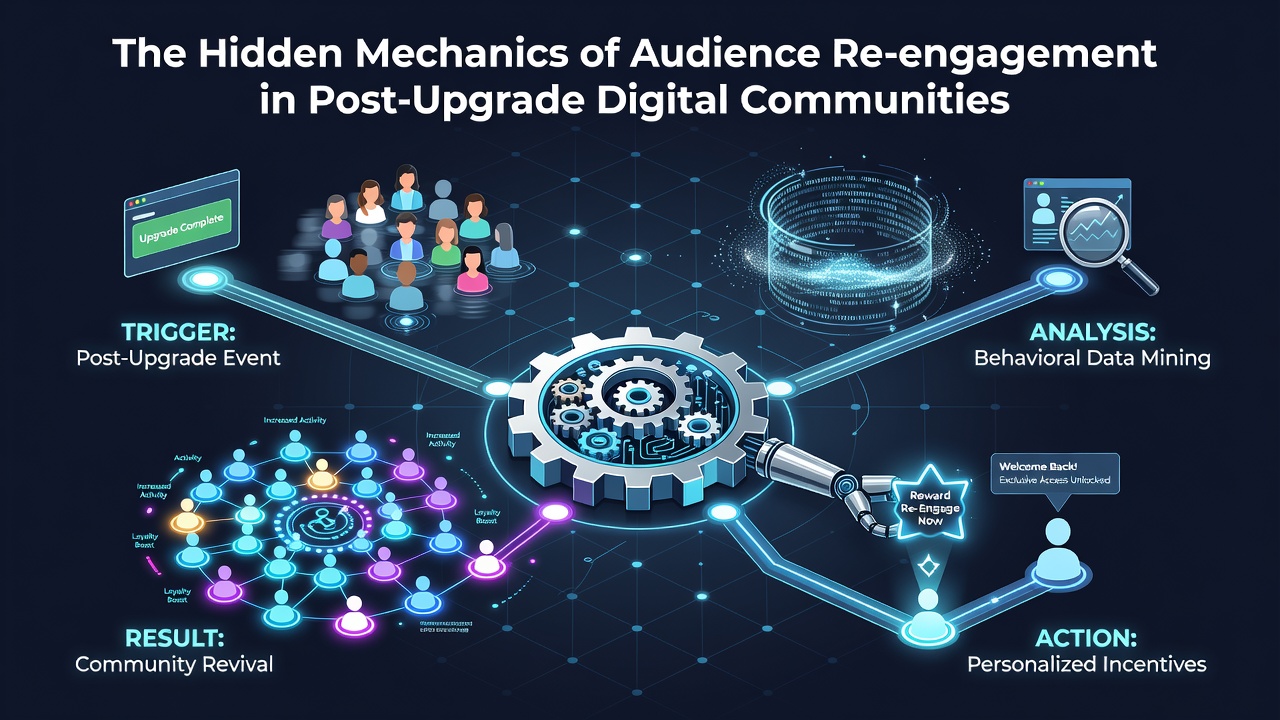
Platform upgrades in digital communities often trigger shifts in user behavior that require careful analysis of retention patterns and interaction data according to reports from research institutions across multiple regions and observers note that these changes can unfold over weeks or months depending on the scale of the update and the community's prior habits. In October 2026 several major platforms rolled out infrastructure changes that altered notification systems and content discovery algorithms while data from ongoing monitoring shows users responding through varied re-engagement pathways rather than immediate return to previous activity levels.
Core Elements of Post-Upgrade Dynamics
Communities that undergo technical overhauls frequently experience initial drops in daily active participation because members encounter new interfaces or altered navigation flows and experts tracking these events through longitudinal studies have documented how early friction points lead to temporary disengagement unless countered by targeted outreach mechanisms. The process involves mapping user cohorts based on their pre-upgrade activity and then applying segmented communication strategies that highlight specific benefits such as improved search functions or enhanced privacy controls and figures from industry analyses reveal that communities employing such segmentation see faster recovery in return visits compared to those relying on generic announcements alone.
Hidden mechanics emerge when platforms integrate behavioral triggers like personalized recaps of missed content or timed prompts that draw on historical user data and researchers have observed these elements working in tandem with community moderation tools to rebuild momentum. Data indicates that successful re-engagement often hinges on timing because interventions delivered too soon after an upgrade can feel intrusive whereas delayed actions risk permanent attrition among casual participants.
Behavioral Patterns and Recovery Pathways
Users in subscription-based or forum-style communities tend to follow predictable sequences after upgrades including an exploration phase followed by either consolidation or departure and studies conducted by academic groups in North America and Europe demonstrate that those who receive value demonstrations within the first 72 hours post-upgrade show higher retention rates over subsequent quarters. What's interesting here is how small adjustments in email cadence or in-app messaging can shift outcomes dramatically while aggregate metrics from platform logs confirm that combining automated reminders with human-curated highlights produces stronger results than either approach in isolation.
Take one instance where a collaborative workspace platform updated its core architecture in early 2025 and subsequent tracking showed that members who engaged with onboarding tutorials reconnected at rates exceeding those who bypassed them and similar patterns appear across gaming forums and professional networks alike. The reality is that these mechanics rely on data pipelines that surface individual preferences without overwhelming users and organizations that maintain transparent data practices tend to sustain trust levels even during disruptive transitions.
Data Insights from Recent Platform Shifts
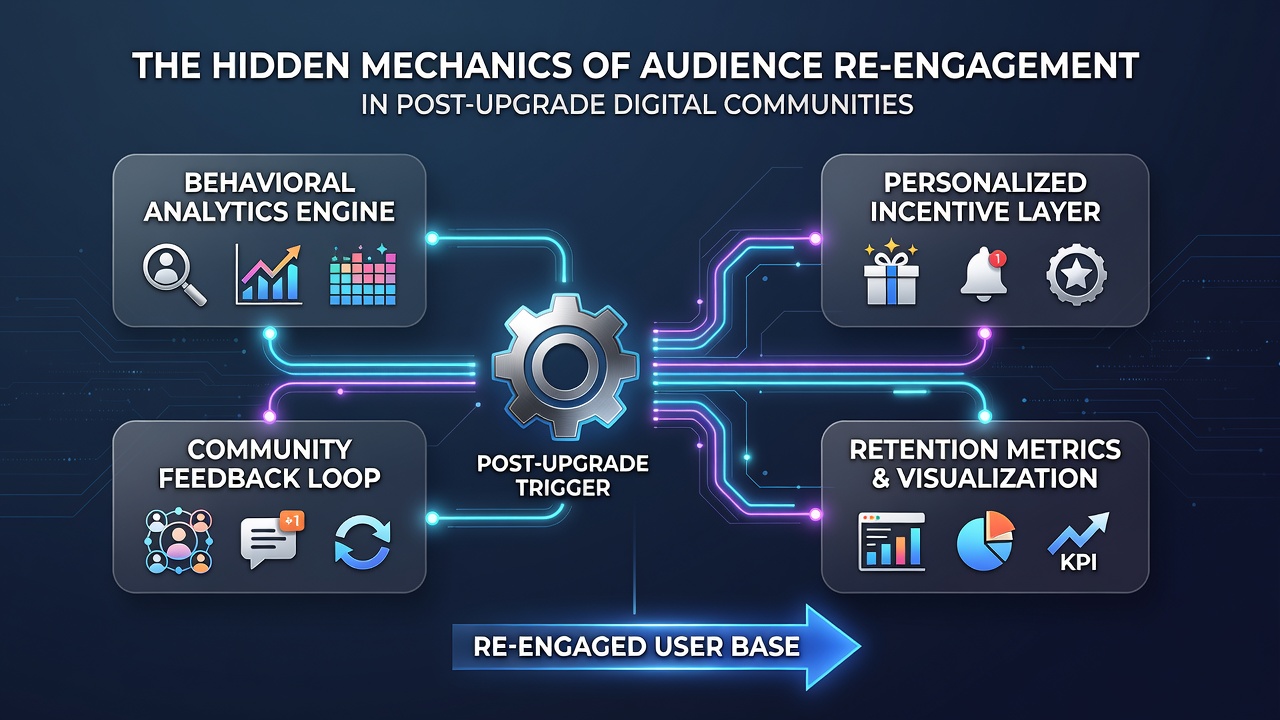
According to research published by the Pew Research Center on evolving digital participation trends, communities that prioritize feature education alongside upgrades retain broader user bases over time and these findings align with observations from the Australian Competition and Consumer Commission regarding consumer responses to service modifications in online environments. Platforms that publish clear change logs and offer opt-in pathways for new tools see reduced churn because members feel informed rather than surprised by alterations and quantitative reviews of user logs support this connection between transparency and sustained activity.
Yet the underlying processes extend beyond simple notifications into algorithmic adjustments that surface older threads or connections based on updated relevance scores and analysts reviewing these systems note that such behind-the-scenes refinements can reactivate dormant participants without direct outreach. The ball remains in the platform operators' court to calibrate these features carefully since over-optimization risks creating echo chambers that limit broader community discovery.
Implementation Strategies Across Sectors
Professional networks and hobbyist forums alike apply layered approaches that begin with technical audits to identify friction areas and then move into A/B testing of re-engagement sequences and evidence from multiple case studies shows that incorporating feedback loops allows communities to refine tactics in real time rather than waiting for full cycle reviews. Those who've examined post-upgrade scenarios across regions emphasize the value of cross-referencing qualitative surveys with quantitative telemetry because discrepancies between stated preferences and actual behavior often reveal overlooked mechanics.
So when a platform introduces enhanced search capabilities or collaborative editing features the response patterns can vary by demographic and longitudinal data helps isolate which groups require additional support structures. It is noteworthy that communities maintaining consistent moderation standards throughout the transition period experience smoother recoveries because established trust reduces the perceived risk of continued participation.
Conclusion
The hidden mechanics of audience re-engagement ultimately center on coordinated use of data segmentation, timed interventions, and transparent communication that together address both technical and social dimensions of platform changes. Observers tracking developments through 2026 continue to document how these elements interact in ways that either accelerate or hinder return to equilibrium and the patterns observed provide actionable frameworks for operators seeking stable community growth amid ongoing technical evolution.